
Add a scale bar without losing the image scale
A scale bar should tell the reader how large a feature is, not simply decorate the image. NotyScale uses the calibration attached to your image to connect pixels with a real distance. You can then choose a useful bar length, check the unit, adjust the presentation and export the result from one workspace.
This avoids the common manual workflow of drawing an approximate line, typing a label separately and hoping they still agree after the image is resized. The original image remains your reference while the scale bar is prepared for the final figure.
Who NotyScale is for
- Researchers preparing SEM, TEM, optical microscopy or other calibrated scientific images
- Authors who need readable, consistent scale bars across a paper, poster or presentation
- Laboratories that want to reuse the same bar and label style without re-entering every visual setting
What you can control
Start from the scientific meaning: select the calibration, physical length and unit. Then shape the presentation around the image instead of covering important structures.
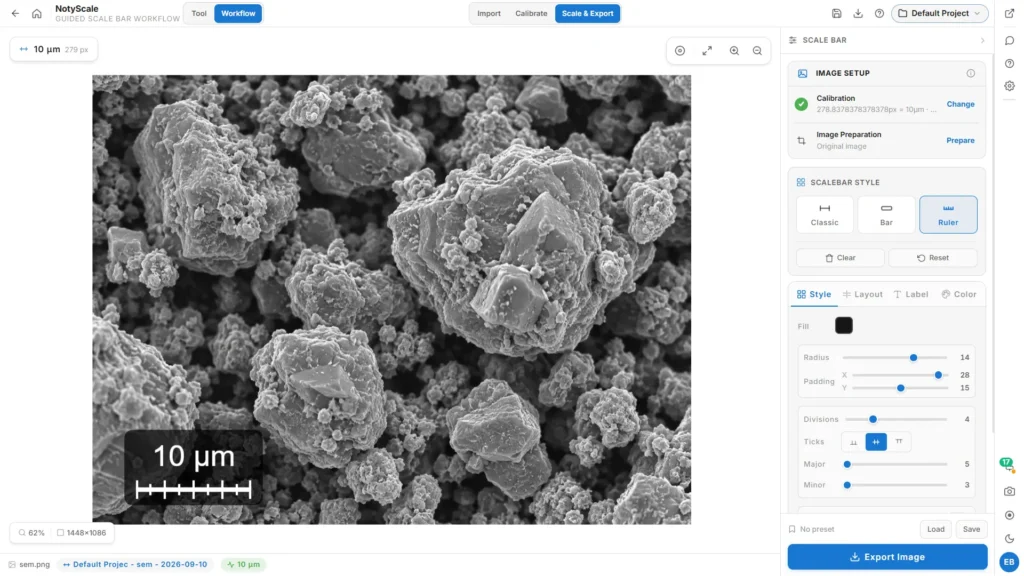
- Choose Classic, Bar or Ruler according to the figure and the amount of detail the reader needs.
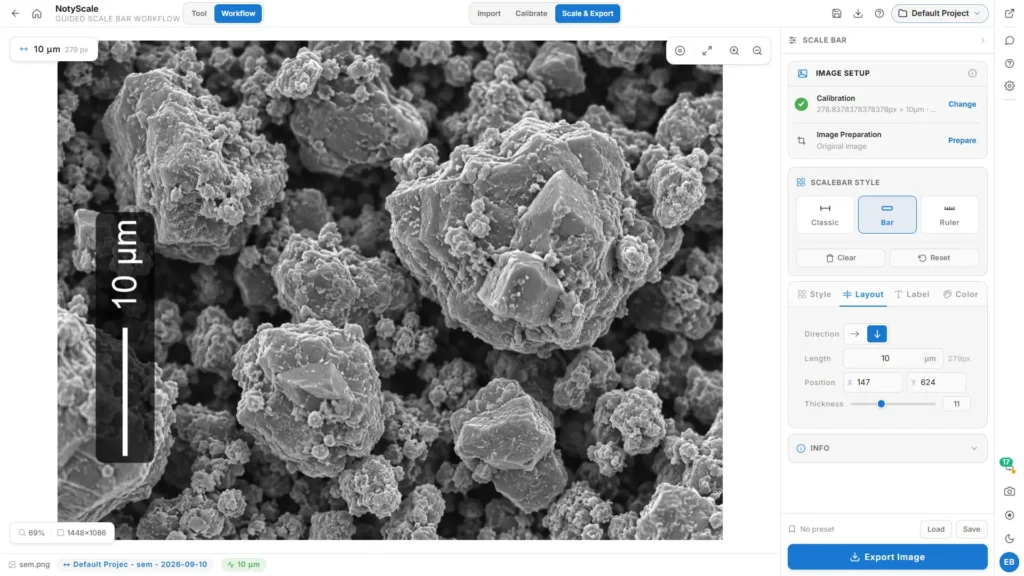
- Set horizontal or vertical direction, length, thickness and exact placement.
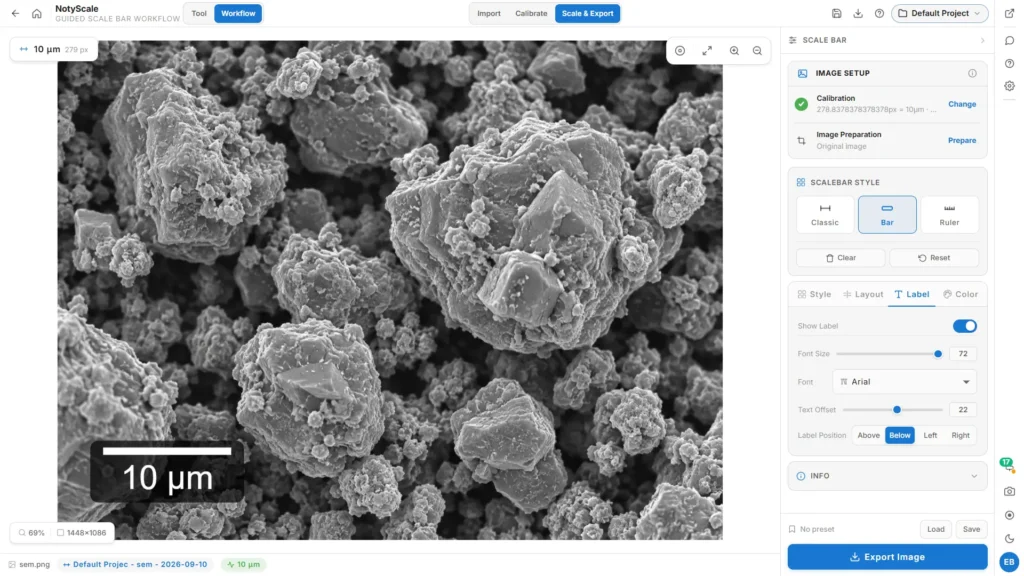
- Show or hide the label and adjust its font, size, offset and position.
- Set bar, label and background colors for clear contrast on light or dark regions.
- Save a successful appearance as a preset when several figures need the same visual language.
Before and after: from source scale to a prepared bar
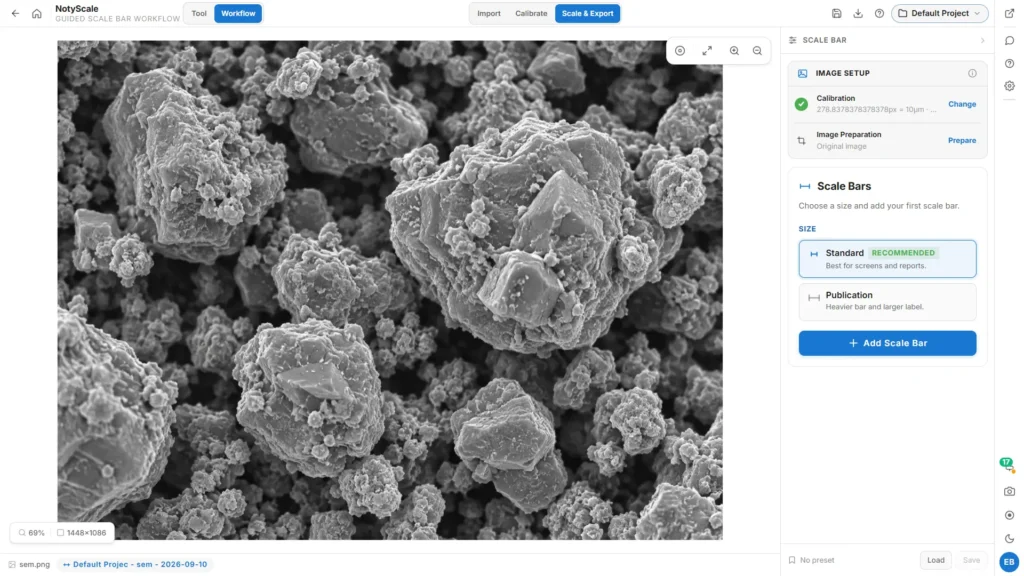
The left view shows the source during calibration. The right view shows the same demonstration artwork in NotyScale with the scale-bar editor active. Drag the handle, use the arrow keys while it is focused, or tap anywhere on the comparison to inspect either stage.
Keep the label readable
A correct bar can still fail if its label becomes too small at publication size. The Label panel keeps the typography controls together: font, size, offset and placement above, below, left or right of the bar. Preview the image at the size your reader will actually see. Avoid placing the label over a high-detail region, and prefer a clear unit symbol such as µm or nm instead of an ambiguous abbreviation.
Place the bar precisely
Use the Layout panel when a rough drag is not accurate enough. Direction, length, X/Y position and thickness can be adjusted numerically while the canvas shows the result. Keep a consistent margin from the image edge and leave structures needed for interpretation unobstructed. If you reuse a preset, recheck placement for every image because the useful empty area may change even when the visual style does not.
A short workflow
- Load the original image and select its attached calibration. If no reliable calibration exists, create or verify one before choosing a physical unit.
- Add a scale bar, select its physical length and choose Classic, Bar or Ruler. Position it where it remains visible without hiding evidence.
- Adjust the label and colors, then inspect the image at the intended output size. Check the number, unit and contrast rather than judging only the editor view.
- Export the prepared image or save the result to NotyLibrary. Open the exported file once and confirm that the bar is still sharp, readable and correctly placed.
Check these details before export
- The calibration belongs to this exact source image and acquisition scale.
- The displayed length and unit match the value you intend to report.
- The bar and label have enough contrast against their immediate background.
- The label remains legible after the figure is resized for a journal, slide or poster.
- The bar does not cover a feature that readers need to inspect.
- The output dimensions, DPI and file format match the destination.
Output you can keep
Export the prepared image as PNG, JPEG, PSD, TIFF, PDF or SVG using the selected dimensions and DPI, or save the result in NotyLibrary. Choose a raster format for a finished image workflow and SVG when a compatible downstream layout needs vector artwork. Keep the unmodified source and its calibration alongside the export so the figure can be checked or recreated later.
Limitations
- Without calibration, NotyScale remains in pixel mode. A pixel bar is useful for layout testing but does not report a physical distance.
- Calibration is image-specific. Do not reuse it after resampling, cropping that changes pixel dimensions, or switching magnification unless you have verified that the scale remains valid.
- NotyScale does not decide which physical length is scientifically appropriate for your figure; the author must choose a value that is accurate and readable.
- A raster export bakes the bar into the image. Resize the complete image proportionally afterward; never resize or redraw the bar independently.
- Export and NotyLibrary save require authentication, and available storage or usage allowances may vary by plan.